Home » Archives for hrsynergy » Page 8

Author: hrsynergy

February 2025 Dates

FEBRUARY Calendar

February is American Heart Month and Black History Month.

Request a new Form W-4 from any employee who claimed an exemption from income tax withholding last year and wants to claim the exemption again for 2024. If the employee doesn’t give you a new Form W-4, withhold tax as if the employee is single or married and filing separately without any allowances.

February 1 OSHA Form 300A must be posted in visible areas from Feb 1- April 30
February 2 Groundhog Day
February 7 Wear Red Day
February 10 Form 940 is due (if quarterly FUTA taxes were paid when due)
February 14 Valentine’s Day
February 17 President’s Day
February 22 School Bus Driver Appreciation Day
February 28 Forms 1094-C and 1095-C, 1099-MISC without NEC to IRC are due (if paper filing) (if filing electronically, due 3/31/25)
February 28 Form 8809 Paper Filing Deadline (Request an extension of the due date to file federal tax forms, including the W-2, W-2G, 1042-S, and 1094-C.)


Client Alert: BY 12/15/24: General HIRD reporting requirements

BY 12/15/24: General HIRD reporting requirements

Massachusetts employers, it’s time to get familiar with the Health Insurance Responsibility Disclosure (HIRD) form. This annual requirement, launched in 2018, helps MassHealth identify members who might qualify for the Premium Assistance Program by gathering information about employer-sponsored insurance (ESI) offerings. Here’s a quick breakdown to keep you compliant.

HIRD Form Purpose: Annual reporting requirement for Massachusetts employers to provide information on employer-sponsored insurance (ESI) offerings, aiding MassHealth’s Premium Assistance Program.

Who Must File: Employers with six or more employees in Massachusetts, even if health insurance isn’t offered.

Filing Period: November 15 to December 15, completed electronically via MassTaxConnect (no paper forms).

Responsibility: Employers must ensure timely filing, even if using a payroll company or PEO. Coordination with HR/benefits is necessary.

Data Collected: Employer-level health plan information only, no personal employee data.

Non-Compliance Impact: No new penalties, but important for MassHealth assistance programs and won’t affect EMAC Supplement obligations.

Action Required for Non-Offering Employers: Still required to submit, indicating no health insurance is provided.

IS YOUR COMPENSATION PACKAGE MARKETABLE?

Crafting a Strong Compensation Philosophy: The Key to Attracting and Retaining Talent

A compensation philosophy is more than just a document; it’s a guiding framework that defines an organization’s approach to employee pay. It explains the “why” behind compensation decisions, offering clarity and consistency that benefit both employers and employees. By establishing a solid compensation philosophy, companies can effectively attract, retain, and motivate their workforce.

What Is a Compensation Philosophy?

At its core, a compensation philosophy is a formal statement that outlines the company’s stance on employee pay. It serves as a strategic tool that defines pay programs, aligns compensation practices with organizational goals, and ensures fair and equitable pay practices.

This philosophy acts as a compass, helping employers navigate decisions about salaries, bonuses, benefits, and other rewards. When thoughtfully crafted, it provides a framework for consistent and transparent compensation practices.

What Should a Compensation Philosophy Entail?

A comprehensive compensation philosophy should include the following elements:

  • Pay Structure: Clear definitions of base pay, variable pay, and incentives.
  • Market Positioning: The organization’s stance on competitive pay relative to the market (e.g., leading, matching, or lagging market rates).
  • Total Rewards Strategy: A holistic approach encompassing benefits, bonuses, recognition programs, and non-monetary rewards.
  • Pay Equity: Commitment to ensuring equal pay for equal work, with lawful variances based on experience, performance, or other non-discriminatory factors.
  • Legal Compliance: Adherence to applicable labor laws and regulations.
  • Performance Alignment: Criteria linking compensation to individual, team, and organizational performance.
  • Communication Guidelines: Strategies for transparently sharing compensation policies and practices with employees.

Factors Influencing a Compensation Philosophy

Developing a compensation philosophy involves collaboration between the human resources department and the executive team. It is shaped by several factors, including:

  • Financial Position: The organization’s budgetary constraints and financial health.
  • Size and Industry: The scope of the organization and its competitive landscape.
  • Business Objectives: Long-term strategic goals and initiatives.
  • Market Conditions: Salary benchmarks and talent availability.
  • Talent Acquisition Challenges: Specific roles or skills that are hard to fill.

Given these dynamic factors, a compensation philosophy should not be static. Periodic reviews ensure it stays aligned with the current business environment. For instance, if market conditions demand higher pay for specialized roles, the organization may need to revise its philosophy to stay competitive.

Reviewing and Updating the Compensation Philosophy

A compensation philosophy should be reviewed regularly—at least annually or in response to significant changes in market conditions, business goals, or legal requirements. Regular updates ensure that the philosophy remains relevant and effective.

Organizations often use tools like salary benchmarking software, compensation surveys, and data analytics platforms to assess market trends and internal pay practices. Engaging an external consultant or compensation analyst (like HR Synergy) can also provide valuable insights and ensure that pay structures remain competitive and compliant.

Commitment to Education and Transparency

An effective compensation philosophy is not just about the numbers—it’s also about communication. Employers must commit to educating both managers and employees on how compensation decisions are made. Transparent communication fosters trust and ensures that employees understand how their pay aligns with their contributions and the organization’s goals.

Objectives of a Compensation Philosophy

A well-designed compensation philosophy supports an organization’s broader strategic plan by:

  1. Attracting Talent: Offering competitive compensation to draw top candidates.
  2. Motivating Performance: Encouraging employees to excel in their roles.
  3. Retaining Key Talent: Rewarding high performers to reduce turnover.
  4. Defining Competitive Positioning: Establishing the organization’s stance on base pay, variable compensation, and benefits.
  5. Ensuring Fairness: Guaranteeing equal pay for equal work while allowing lawful pay differences.
  6. Maintaining Legal Compliance: Adhering to labor laws and regulations.

Quality Test for an Effective Compensation Philosophy

To be successful, a compensation philosophy must meet specific quality standards. Ask the following questions to evaluate its effectiveness:

  • Equity: Is the program perceived as fair by employees?
  • Defensibility: Can the organization justify its compensation practices?
  • Fiscal Sensitivity: Are the programs financially sustainable?
  • Legal Compliance: Do they adhere to labor laws and regulations?
  • Communication: Can the philosophy and its policies be clearly communicated to employees?
  • Competitiveness: Are the programs in line with market trends and organizational goals?


While human resources typically lead the development of a compensation philosophy, collaboration with the leadership team is essential. Leadership provides strategic input and ensures organizational alignment, helping to build buy-in across all levels.

A thoughtful compensation philosophy is a cornerstone of a successful human capital strategy. It not only helps organizations attract and retain top talent but also fosters a culture of fairness and transparency. By regularly reviewing and updating the philosophy, employers can ensure that their compensation practices remain competitive and aligned with evolving business needs.


Read more from our COMPENSATION SERIES:

Is Your Compensation Package Marketable?

The Paycheck Playbook: Key Compensation Trends Shaping 2025

Cracking the Compensation Code: How HR Synergy Can Help

Read more from our previous series -THE EMPLOYEE LIFE CYCLE:

Attract Employees 

Recruitment

Onboarding

Retention

Offboarding

January 2025 Dates

JANUARY 2025 Calendar

January is Be Kind to Food Servers Month, National Blood Donor Month, and Walk Your Pet Month.

January 1 New Year’s Day
January 3  Drinking Straw Day
January 5-11 Thank Your Customers Week
January 13 Rubber Duckie Day
January 19-25 Hunt for Happiness Week
January 20 Martin Luther King, Jr. Day
January 24 Activity Professionals Day
January 25 Intravenous Nurse Day
January 29 Puzzle Day
January 31 Form W-2 is due to be e-filed, paper-filed, and furnished to recipients.

Multiple 1099 forms are due

Quarterly Forms 720 and 941 are due 

Annual Form 940 is due (if quarterly FUTA taxes were not paid when due)

Distribute 1095-B & 1095-C Forms to employees (if applicable)


Offboarding: Leaving a Lasting, Positive Impression: Employee Life Cycle

The Art of Offboarding: Leaving a Lasting, Positive Impression

When an employee decides to leave your company, the journey doesn’t end there. The offboarding process often doesn’t get the same level of attention as onboarding, yet it’s an essential part of the employee life cycle (ELC). Done right, offboarding can create a ripple effect of benefits for both the organization and the departing employee. It’s a two-fold opportunity: to gain valuable insights into hiring and employee experience and to leave a positive, lasting impression. A strategic, thoughtful offboarding experience can strengthen your employer brand and create advocates for your company long after employees have moved on.

The Goal: Happy Leavers
Imagine this: an employee leaves your company with a smile, feeling appreciated and content, despite their decision to move forward. One of the primary goals of offboarding is to ensure that departing employees leave as satisfied individuals who feel respected and valued. When employees exit on a high note, they’re more likely to become your company’s ambassadors, speaking positively about their experiences and contributing to a strong employer brand. In today’s connected world, word-of-mouth is powerful. This can have lasting impacts, such as attracting top talent and building a network of alumni who may even become future clients, partners, or boomerang employees with more experience and new insights.

Key Components of an Effective Offboarding Process
Insight: Exit Interviews
Exit interviews are a key element of offboarding. These interviews provide departing employees a platform to share their honest feedback. What aspects of the job and workplace culture did they appreciate? What challenges did they face? Use these insights to refine your practices, identify potential gaps in your employee engagement strategy, and enhance the overall employee experience. A successful exit interview isn’t just about collecting feedback; this feedback loop can be invaluable for creating a better workplace environment and improving retention.

A Smooth and Supportive Transition
A well-structured offboarding process ensures a smooth transition for both the employee and the organization. This includes clear communication, proper handover of responsibilities, and offering resources to support the departing employee’s next career step. Whether it’s providing references, discussing alumni programs, or even just expressing gratitude for their contributions, these gestures make employees feel appreciated and leave on good terms.

Key Steps for Effective Offboarding:
Plan and Communicate: Clearly outline the steps of the offboarding process and communicate them to the employee.
Conduct Meaningful Exit Interviews: Conducting exit interviews is a critical part of offboarding. Use this time to gather constructive feedback and understand the employee’s experience.
Celebrate Contributions: A simple yet powerful way to make a lasting impression is by acknowledging the departing employee’s contributions. Acknowledge the achievements of the employee and express genuine appreciation for their work.
Offer Support: Whether it’s career counseling or a heartfelt send-off, ensure the employee feels prepared for their next chapter.
Stay Connected: Offboarding doesn’t have to mean cutting ties completely. If appropriate, consider keeping in touch with former employees through an alumni network or other professional groups. This network can serve as a talent pool for future hiring and foster opportunities for collaboration down the road.

Offboarding is more than just a final HR process; it’s a strategic opportunity to learn, grow, and leave a lasting, positive impact. By aiming for happy leavers, conducting insightful exit interviews, and ensuring a smooth transition, your organization can boost its reputation and continually refine the employee experience. Remember, the way you say goodbye can be just as important as the way you say hello.

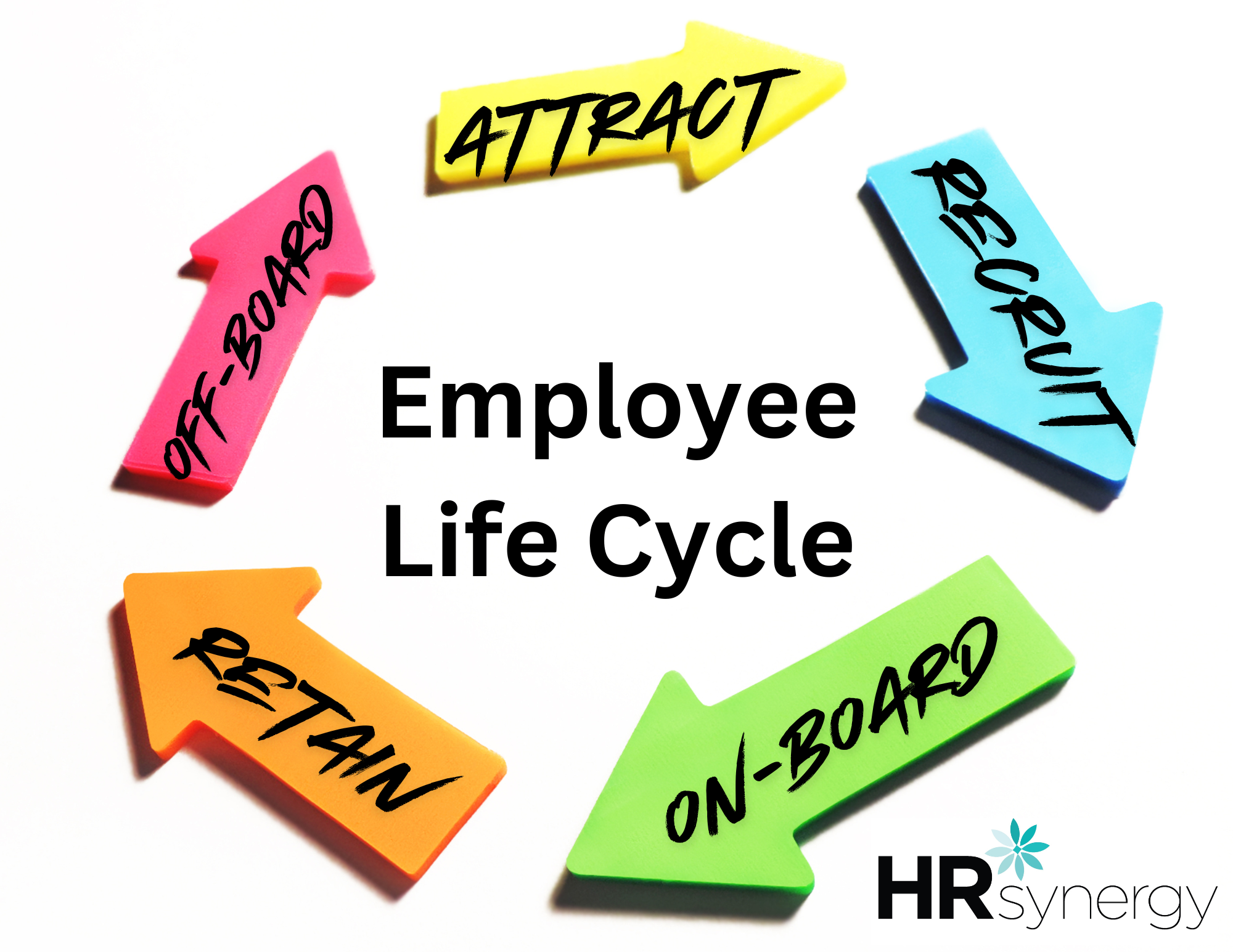
Effectively managing the employee life cycle (ELC) is crucial for HR professionals. By focusing on key stages—attraction, recruitment, onboarding, retention, and offboarding—organizations can better meet employees’ needs, boost productivity, and create a positive work environment. A well-managed ELC benefits both employees and the organization’s overall success.


Read more from our THE EMPLOYEE LIFE CYCLE:

Attract Employees 

Recruitment

Onboarding

Retention

Offboarding

December Calendar

December Calendar

December is Read a New Book Month.

December 7 National Pearl Harbor Remembrance Day
December 10 Human Rights Day
December 13 National Cocoa Day
December 21 Winter Solstice
December 25-January 2 Hanukkah
December 25 Christmas
December 26-January 1 Kwanzaa
December 29 Review employee handbooks, updated workplace policies, distribute 2025 holiday calendar and payroll calendar
December 31 Nondiscrimination testing, 401K plans, 125 Premium Only Plans (POP), and flexible spending account (FSA) nondiscrimination testing (if on calendar plan year)

Client Alerts: 2024 OVERTIME RULE

December 2024: How Should Employers Respond Now that OVERTIME RULE Is Blocked?

A Federal court decision on November 15 blocked planned increases to the salary threshold for overtime exemptions.

The salary threshold will return to the 2019 level of $35,568 annually ($684.00 per week), halting increases scheduled for July 2024 ($43,880) and January 2025 ($58,656).

The court criticized the increases for exceeding statutory authority and prioritizing salary thresholds over the duties test. The ruling applies nationwide and nullifies automatic salary threshold adjustments.

  • Employers who increased salaries in preparation for the new rule are unlikely to lower them. However, some employees who were reclassified as nonexempt might be switched back to exempt if they fulfill the duties test.
  • The duties test remains a key determinant for white-collar exemptions, requiring assessment of job roles alongside salary.
  • The ruling may be appealed, and changes could occur under the incoming presidential administration.
  • Employers must assess workforce impacts and comply with duties tests and state notice requirements when reclassifying employees.
  • Duties tests outline specific criteria for executive, administrative, and professional exemptions, ensuring roles meet both duties and salary standards.

APRIL 23, 2024: OVERTIME RULE

On April 23, 2024, the USDOL issued a Final Rule that will raise the minimum salary level for exempt employees and increase the total compensation minimum for highly compensated employees (HCEs). The new rule also introduces a mechanism to update these thresholds every three years. Despite potential legal challenges that may delay implementation, employers should review and adjust current salaries to ensure compliance with the new minimums.

Overtime Rule Changes post-its
Overtime Rule Changes

The rule’s journey began in Fall 2023 when the USDOL proposed changes to the federal wage law overtime exemption requirements. These proposed changes were open for public comment until November 8, 2023. During the comment period, concerns were raised about the substantial 65% increase and its impact on businesses during a tough economic period. To ease the transition, the USDOL adopted a two-step compliance approach, raising salary thresholds on July 1, 2024, and January 1, 2025.


The USDOL estimates that about 1 million currently exempt workers earn below the new $43,888 threshold and another 3 million earn less than $58,656. Employers must either raise salaries to meet the new minimum levels or reclassify these employees as non-exempt and eligible for overtime pay. While legal challenges are anticipated, similar to those in 2016, the outcome is uncertain. Therefore, employers should review current exemptions to avoid potential misclassification liabilities.

Employers should ensure exempt employees are paid at least the current minimum salary and that their job duties align with the exempt categories. For those who do not meet the duties test or new salary levels, employers need to confirm work schedules, communicate overtime eligibility, and review timekeeping, meal break, and overtime approval policies. Additionally, managers and supervisors should be trained on monitoring work hours and timekeeping.

Employers operating in multiple states should also consider varying state wage laws, which may have higher minimum salaries for overtime-exempt employees, to avoid unfavorable wage audits or claims. Compliance with both the FLSA Final Rule and state laws is crucial for reducing legal risks.

Reach out to us at HR Synergy with questions.

November Calendar

November Calendar

November is Men’s Health Awareness aka Movember and National Alzheimer’s Disease Month.

November 1 Remind employees to submit FSA Receipts before end of year
November 2 Dia de los Muertos
November 10-16 Nurse Practitioner NP Week
November 11 Veterans Day
November 13 World Kindness Day
November 14 National Diabetes Day
November 21 Great American Smokeout
November 28 Thanksgiving
October 31 Small Business Saturday

Retention: Keeping Employees Engaged: Employee Life Cycle

Retention: Keeping Employees Engaged

In today’s fast-paced work environment, retaining talented employees is one of the top challenges for many companies. High turnover can disrupt workflow, decrease morale, and result in costly recruitment and onboarding processes. Employee retention is a continuous cycle of engagement and support—a process that benefits not only individual employees but also the organization as a whole. A stable workforce, where employees are engaged and fulfilled, is ultimately more productive and committed to the company’s vision. Here, we’ll explore key strategies for keeping employees engaged to build and maintain a strong, committed workforce.

Engagement is the cornerstone of employee retention. Engaged employees are those who feel valued, challenged, and connected to their work, which leads to greater job satisfaction. When employees are actively engaged in their roles, they’re not just clocking in hours—they’re invested in their work and willing to go the extra mile.

Growth is an essential part of feeling engaged in one’s career. Offering employees opportunities to learn and develop skills is one of the best ways to keep them fulfilled. This could be in the form of attending workshops, online training, or even mentorship programs within the company. Investing in professional development demonstrates that the organization is invested in its employees’ long-term success.

Recognizing employees for their hard work is a powerful motivator. It doesn’t have to be an elaborate award ceremony; simple acts like acknowledging achievements in team meetings, sending a thank-you email, or spotlighting employee successes on internal platforms can make a big difference. Feeling seen and appreciated contributes to an employee’s sense of value within the organization.

Culture plays a significant role in employee retention. When the work environment is positive, employees feel motivated to be there every day. A positive work culture encourages open communication, collaboration, and mutual respect. It also involves leaders who are approachable, empathetic, and responsive. Making space for team-building activities, inclusive practices, and open-door policies can foster a culture of trust and support.

Flexibility has become one of the most sought-after benefits. Offering flexible hours, hybrid work options, or even remote work opportunities where possible can boost employee satisfaction. Flexibility helps employees balance their personal lives with professional commitments, which can reduce burnout and increase engagement.

A stable workforce is one where employees feel a sense of security and loyalty. Retention strategies that keep employees engaged create stability within the organization, which directly impacts productivity and reduces the need for frequent hiring. To achieve a stable, engaged workforce, companies need to proactively address employee concerns and demonstrate their commitment to their teams.

Regular one-on-one meetings with employees can help managers identify potential issues before they lead to turnover. During these check-ins, managers should ask employees about their career goals, listen to any challenges they’re facing, and find ways to offer support. Consistent communication helps employees feel comfortable voicing concerns and also gives managers insights into the employee experience.

Ignoring or delaying responses to employee concerns can erode trust. When issues arise, they should be addressed as soon as possible. Whether it’s about workload, interpersonal challenges, or personal matters, a timely response shows employees that their well-being matters.

Stagnation can be a major factor in why employees look elsewhere for work. Providing clear advancement paths within the organization can help employees see a future with the company. This may involve mapping out possible career steps, implementing succession planning, and offering skills development programs that prepare employees for promotions and new responsibilities.

Employee retention is not a one-time action but a continuous journey of engagement and development. It’s about creating a workplace that values its employees, listens to their needs, and provides the tools and resources to support their growth. In doing so, companies not only retain top talent but also cultivate a team of motivated, fulfilled employees who are aligned with the organization’s goals.

When employees feel engaged, valued, and fulfilled, they are more likely to stay long-term. And with a stable, productive workforce, companies can redirect time and resources that would have been spent on recruitment into innovation, growth, and further enhancing the employee experience.

Retaining employees starts with an investment in their experience—a focus on creating an environment where they can thrive. So, if you’re looking to improve employee retention, start by looking at your organization’s engagement strategies and asking, “Are we meeting our employees’ needs?”

By fostering a culture that prioritizes growth, recognition, and fulfillment, companies can reduce turnover and build a lasting, loyal team ready to face the challenges of tomorrow.

Offboarding next month…


Read more from our THE EMPLOYEE LIFE CYCLE:

Attract Employees 

Recruitment

Onboarding

Retention

Offboarding

Client Updates: Navigating the Shifting Landscape of Employment: Key Issues for Employers

The past year has seen significant changes in the employment landscape, presenting both challenges and opportunities for employers. Federal agencies finalized new rules affecting minimum wage, overtime exemptions, pregnancy accommodations, OSHA inspections, and non-compete agreements. Additionally, the Supreme Court’s recent decisions have reshaped administrative law, while state legislatures continue to expand employment laws. State legislatures expanded the patchwork of employment laws on a host of workplace topics.

To help employers navigate this evolving landscape, we will outline four critical labor and employment issues.

1. Labor Force Participation for Prime-Age Workers Continues to Increase, Yet Worker Shortages Remain

Despite an increase in labor force participation among “prime age” workers (ages 25 to 54), employers still face challenges filling open positions. According to the U.S. Chamber of Commerce, around 1.7 million workers are missing from the post-pandemic workforce. Post-pandemic shifts in work preferences, such as a desire for remote or flexible work, have left many sectors understaffed. Also, many older workers retired during the pandemic. Skilled labor shortages and immigration challenges exacerbate the issue, leaving businesses struggling to find qualified talent.

2. AI is Accelerating Workforce Transformation

AI is transforming the workforce, automating routine tasks, and reshaping job roles across industries. Job fields including AI ethics, machine learning, and data science allow for new career opportunities. While AI brings efficiencies, it also raises concerns about job displacement and increased surveillance. Regulatory oversight is increasing as federal and state governments aim to protect workers’ rights, the administration has issued executive orders to ensure responsible AI development, including the Algorithmic Accountability Act.

3. The U.S. Supreme Court is Upending Administrative Law

Recent Supreme Court rulings have limited federal agencies’ rule-making authority, increasing uncertainty for employers. These decisions could have far-reaching implications for labor and employment law, making it harder for agencies to enforce new regulations and creating a more complex legal environment for businesses.

4. Immigration Challenges Continue to Impact Hiring

Immigration reforms, including changes to H-1B for “highly educated” foreign workers in “specialty occupations” and H-2B for temporary non-agricultural workers visa programs, are affecting employers’ ability to hire foreign workers. Currently, the final part of H-1B Modernization Rule is set to be published in December 2024 and will clarify the regulatory definition of “speciality occupation” and give an added burden of establishing a “direct relationship” between the required degree and the duties to be performed for the employer. Stricter visa caps and regulatory delays on H-2B visas are creating additional hurdles, particularly for industries relying on seasonal labor. The Department of Homeland Security published a Notice of Proposed Rule-Making (NPRM) in 2023 to modernize the program with flexibility and protections for workers. The final rule is set to be published by April 2025. The U.S. Department of State is expanding its pilot program for state-side visa renewals, allowing certain visa holders to renew within the U.S., reducing the need for international travel. This will help employers avoid disruptions and reduce delays for employees re-entering the country. Businesses must navigate these challenges to maintain their workforce.

As businesses adapt to these changes, it’s crucial to stay informed and proactive. Employers must be prepared to address labor shortages, leverage AI responsibly, and understand the legal landscape to remain competitive in the evolving world of work.