
Train your managers to be involved with their reports without micromanaging.
Author: hrsynergy
Find a penny, pick it up…
May 23rd is National Lucky Penny Day! Why not celebrate in your office by dedicating the day to giving back?
How to Retain Your Quality Employees
Now that you have your stellar employees, do you need help retaining them? Consider conducting regular employee pulse surveys of those involved in the day-to-day operations in order to gain insight into your personnel’s morale. You can use this feedback to obtain a valuable perspective and directly tackle issues. There is a direct correlation between higher satisfaction scores and higher levels of profit and productivity. In a SHRM survey, 90% of HR executives concur that consistent employee surveys positively affect the business.
SHRM identifies 4 questions to include in your engagement surveys to enhance retention and productivity.
If you want help formulating your employee pulse survey, contact us today!

Pay Range Transparency in Job Ads
Pay transparency is becoming a bigger workplace issue. In fact, some states and cities are putting into a law the requirement to include a salary range on job advertisements. With the increase in remote workers, your company could be impacted by these laws. Not including a salary range on job ads could also reduce the number of qualified applicants applying. A ResumeLab’s survey reports that 89% holding master’s degrees expect the listing of a salary range. The survey also shows that 4 out of 5 workers are unlikely to apply to a job if the range is not listed, 14% are unsure if they would, and only 6% are not impacted by the presence/absence of a salary range. 80% of those surveyed feel that companies should always clarify how pay is decided. Including a pay range in job postings reflects a company’s security and job satisfaction felt there.
Companies have seen a positive trend in quality applicants by including a salary range and felt pressure to do so by social pressures of Generation Z employees’ openness. According to Payscale research, those who include it have more than doubled in the last year from 22% to 45% that include pay ranges in job ads. There are positive and negative aspects to posting salary ranges. There is an administrative burden to disclose salaries as ⅓ are not ready for pay transparency. Also there is fear that the range feels inflexible and might price-out potential candidates. However, without the pay range disclosed, job candidates have less trust in those companies. Pay range transparency gives companies a competitive edge.
With the strong job market persisting, recruiting and retaining expertise remains a HR concern. Pay transparency is an indicator if a company values employees’ whole selves.
If you are unsure how to post strong job advertisements or need assistance hiring, HR Synergy is here to help you.
I Spy a Resume Lie
With so many employees looking to switch jobs, you may be reading through a high volume of resumes lately. Do you know how to spot inconsistencies and mistruths? In a survey, ResumeLab discovered that 36% of applicants disclose lying on their resumes and 56% admit to “stretching the truth” to appear more experienced. While it shows diligence to verify resumes are completely accurate, who has the time? Here are 7 ways to quickly spot mistruths on resumes before fact-checking any of those you put in the “maybe” pile.

To reduce the chance of potential employees lying, use these 3 interview tips:
- Conduct morning interviews. 20-50% of people are more likely to lie in the afternoon.
- Arrange interviews face-to-face. This can be achieved in person or using video conferencing.
- Administer in-interview testing to verify an applicant’s experience and skills.
Some suspicion is useful when reading resumes -just do not get paranoid as it can be a time and energy suck. In the end, go with your gut.
If you are unsure how to navigate resumes or need help hiring, HR Synergy is happy to help you.
April 2023 Dates
APRIL CALENDAR
April is National Financial Literacy and National Humor month.
If you are unsure how to navigate these deadlines and communicate with your team, HR Synergy is happy to help you.
| TBD | EEO-1 Data Collection Begins *(This date has not yet been set.) |
| March 22-April 21 | Ramadan |
| April 1 | April Fool’s Day |
| April 2 | Autism Awareness Day |
| April 5-13 | Passover |
| April 7 | World Health Day |
| April 9 | Easter |
| April 15 | Forms 7004 and 8928 Filing Deadline |
| April 15-21 | National Volunteer Week |
| April 18 | Tax Day |
| April 21-22 | Eid al-Fitr |
| April 22 | Earth Day |
| April 26 | Administrative Professionals Day |
| April 30 | Quarterly Forms 720 and 941 Due
Can remove OSHA Form 300A (on or after 4/30) |
Employee Appreciation Day
Did you know March 4 is Employee Appreciation Day?
You still have time to show your appreciation for the work your employees, managers, and executives do day-to-day. Your recognition does not have to be extravagant; even sending a note or a small gift is great! Today should be about celebrating your employees and their hard work.

Do you need ideas? Depending on the type of work (in-office, remote, deskless), we are here to provide some ideas!
Office Workers:
- Bring in an entertaining guest speaker today for inspiration
- Lunch on the company
- Games over lunch break (cards, Mintute-to-win-it, corn hole)
- Company Happy Hour on the company
Remote Workers:
- Send DIY pampering kit
- Send a curated care package
- Virtual games over lunch break (Kahoot!)
- Lunch on the company (via gift card)
Free but special:
- Send personalized “thank you” videos
- Give “Dundies” like from The Office (Pam received the “Whitest Sneakers” award)
- Photo scavenger hunt
- Peer appreciation notes
- Employee mentor program
Click here to contact us with questions.
Read Before Considering Workplace Reduction
Is your company considering downsizing? Various reasons might be influencing your need for workplace reduction from the impending nationwide recession, cutting organizational costs, mergers, natural disasters, industry-specific declines, company’s failure, outsourcing, or other reasons. Layoffs need to follow their own set of policies and practices as not to break federal and state statutes and to prevent class action or collective action lawsuits. Before starting the tedious process of mass layoffs, your company might want to consider alternatives such as widespread hour reduction, using a voluntary separation program (VSP), or eliminating wasteful practices. HR Synergy can help you decide the best choice for your company. Contact us today to learn more.
If widespread layoffs make the most sense for your company, you should devise a strategic approach so as not to demoralize employees, cover your legal basis, and keep your company in good public-standing. Selection criteria for layoffs needs to be carefully considered, especially when unions are involved. There are five main ways to choose employees for layoff: seniority-based, employee status-based, merit-based, skills-based, and multiple criteria ranking.
| Selection Criteria | What is it? | Pros | Cons |
| Seniority-Based Selection | Layoff “last hired/first fired” | Lowers risk of age discrimination (ADEA) lawsuits | Doesn’t protect the employer from other discrimination suits
Employees with outdated skills may be retained |
| Employee Status-Based Selection | Layoff part-time workers | Gives greater job security for core workers | Not enough of an impact to the bottom-line if you have few contingent workers |
| Merit-Based Selection | Layoff lowest performing employees | Retain best performing employees | Performance information can be biased and not have thorough documentation |
| Skills-Based Selection | Layoff least skilled employees | Retain employees with most sought-after skills | Potentially exposes you to lawsuits based on ADEA |
| Multiple Criteria Ranking | Layoff using a combination of all the criteria above | Retain senior, high-performing, well-skilled employees | Lessened combination of the above |
Transparency about selection criteria is imperative during the layoff process. It is helpful to underscore that the layoff is not about employees, but instead about positions. Contact us for more information to determine the right selection criteria for your company’s layoffs.
There are effective practices in and legal ways to implement layoffs.
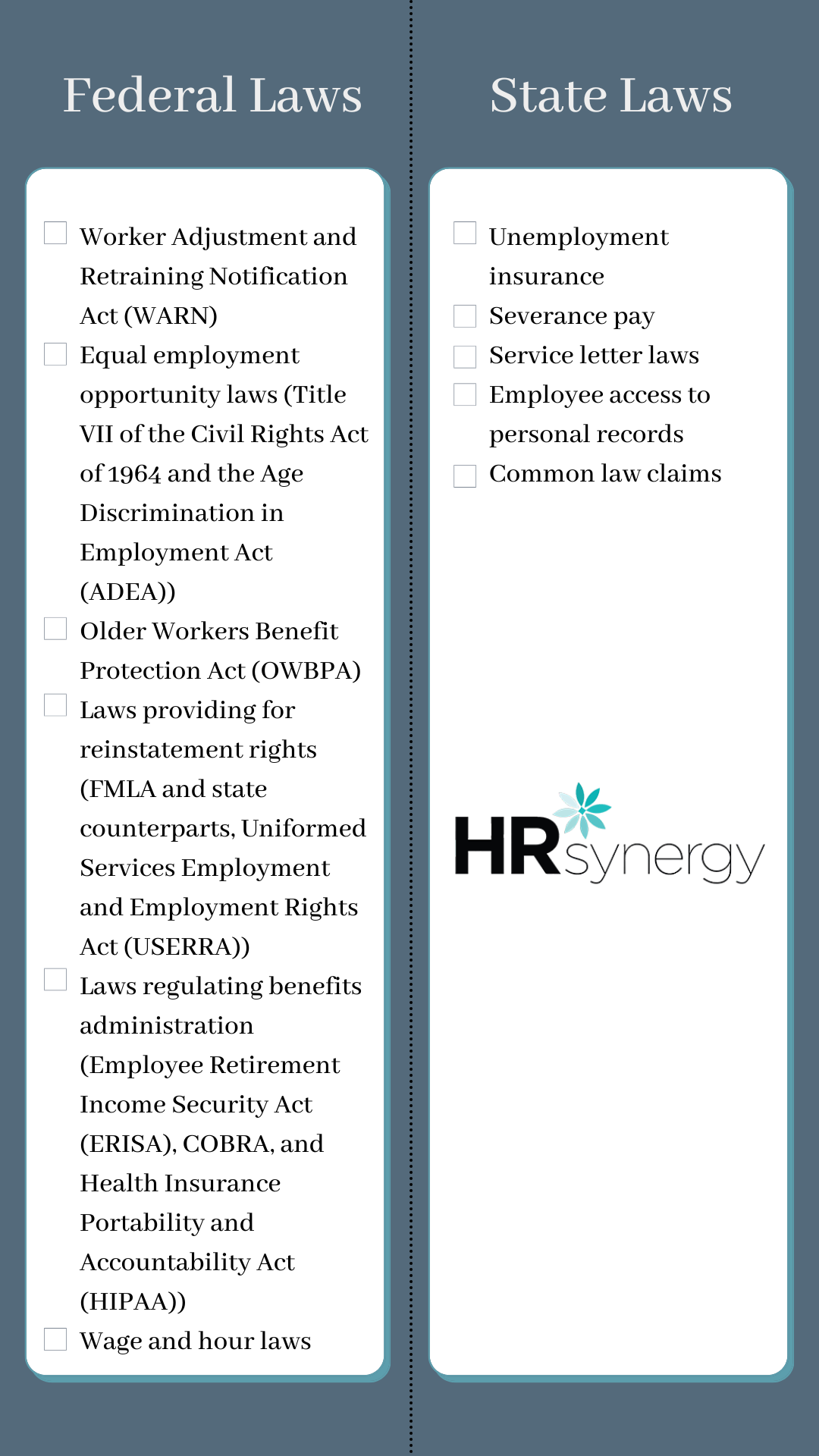
Federal/state/international laws and municipal ordinances/regulations must be considered prior to conducting a layoff. We also encourage you to look into the federal EEOC and the state fair employment practice laws as to avoid discriminatory charges. HR Synergy is well-versed in these and other important topics to consider prior to carrying out workforce reductions. We would love to chat with you about these and other issues to consider before implementing layoffs.
March 2023 Dates
MARCH CALENDAR
March is National Women’s History Month & National Ethics Awareness Month.
If you are unsure how to navigate these deadlines and communicate with your team, HR Synergy is happy to help you.
| March 1 | HIPAA Breach Notification |
|---|---|
| March 2 | CMS Creditable Coverage Disclosure
OSHA Form 300A Due |
| March 3 | Employee Appreciation Day |
| March 8 | International Women’s Day |
| March 12 | Daylight Saving Time Begins |
| March 14 | Pi Day |
| March 17 | St. Patrick’s Day |
| March 20 | 1st Day of Spring |
| March 21 | World Down Syndrome Day |
| March 30 | Baseball Season Starts |
| March 31 | Forms 1095-B, 1095-C, and 8809 E-Filing Deadline
End of Q1 |
Valentine’s Day Hearts and Harassment Training
With Valentine’s Day quickly approaching, we’ll give you things to consider before you ask your coworker to be your secret valentine. And if you still have questions, reach out to schedule your harassment training!
Our training covers:
-Define the differences between bullying and harassment.
-Discuss the different types of behavior in each.
-Why is it important to prevent harassment in the workplace?
-Who’s responsible?
-Company’s policy and complaint process.
-Retaliation (illegal and more than half of all charges filed in fiscal year 2021 included a retaliation claim)
Do you know the difference between bullying and harassment?
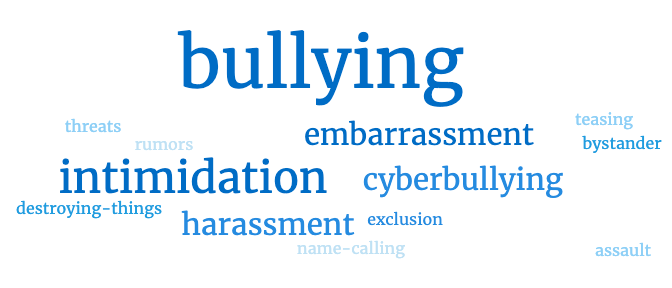
Bullying is “an ongoing pattern of physical or psychological aggression that is threatening, coercive, relentless, and leaves the victim feeling powerless.” There are 5 main types of bullying which include physical, emotional, relational, bystander victimization, and cyber bullying. Bullying itself is an act of aggression that can be both obvious and subtle. Can you identify examples of both obvious and subtle bullying? Can your employees?
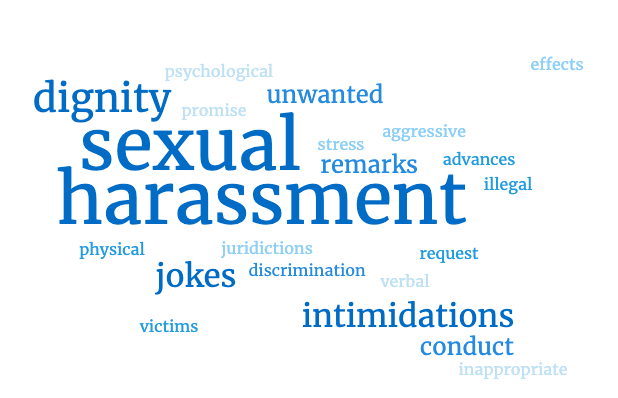
Sexual harassment is “unwelcome sexual advances, requests for sexual favors, and other verbal or physical conduct of a sexual nature in which submission to or rejection of such conduct explicitly or implicitly affects an individual’s work or school.” There are 2 types of sexual harassment. Quid pro quo occurs when a supervisor causes an employee to believe that they must submit to unwelcome sexual conduct in order to get a promotion or something else desirable at work. The second type of sexual harassment is creating a hostile environment. This occurs when unwelcome sexually harassing conduct is so severe, persistent, or pervasive that it affects an employee’s ability to participate in or benefit from a program or activity, or creates an intimidating, threatening or abusive work environment. Harassment can come in the form of verbal, non-verbal, physical, innocent/unintentional pressure. Can you and your employees recognize harassment?
Employees are responsible for creating a work environment free of bullying and harassment. You should eliminate harassing behavior such as demeaning, embarrassing, or offensive conduct. If you experience harassment, immediately report it to one of the persons indicated in your company’s non-harassment policy. Remember that retaliation is strictly prohibited.
Employers are responsible for creating and distributing a company policy and complaint procedure regarding bullying and harassment. Do you need help creating these? Contact us.
Retaliation is “an adverse action taken against an employee because he or she complained of harassment or discrimination or participated in an investigation” and is prohibited by anti-discrimination laws. Retaliation is any adverse action including demotion, discipline, termination, salary reduction, negative performance appraisal, change in job duties or shift assignment. More than half of all charges filed in fiscal year 2021 included a retaliation claim. Be sure you are compliant with anti-discrimination laws and contact us for support.
Click here to contact us for help regarding bullying and sexual harassment training and policy generation.