Home » blog » Page 8

Category: blog

Save yourself the $$$ headache: Schedule Your Mock DOL Audit Today!

As the Department of Labor (DOL) and US Citizenship and Immigration Services (USCIS) increase their scrutiny on employer practices, it is important for companies to ensure compliance with Federal and State labor laws and regulations. A DOL audit can have a significant impact, leading to fines ranging from $500 to a staggering $5,000,000. 


To avoid potential financial and moral risks, consider conducting a mock DOL audit with HR Synergy LLC. Our comprehensive audit will help you identify areas you are doing well and areas of risk of non-compliance and tools to take corrective action, ensuring your company is well-prepared for any future DOL inspection.


What is a Mock DOL Audit? A mock DOL audit is a proactive approach to assess your company’s employment practices throughout the employee life cycle. Our team at HR Synergy LLC gathers detailed information, similar to what the DOL inspectors would examine during a real audit. By conducting this simulation, we can identify potential strengths and weaknesses, allowing you to address any compliance issues before they become a problem.

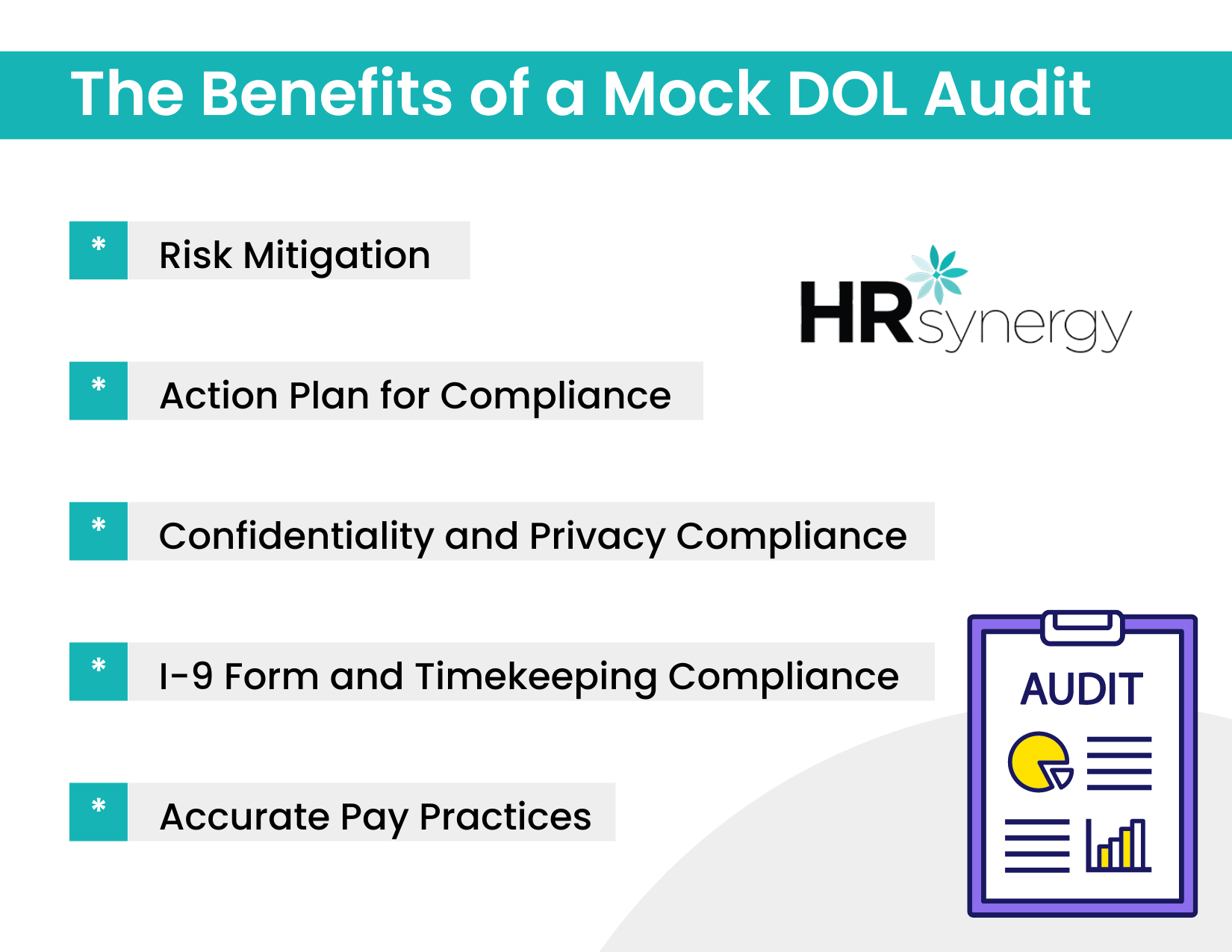
Recently, we conducted a mock DOL audit for a client and identified significant areas of concern. Outdated federal and state labor laws posters, potential HIPAA and personal information exposure, I-9 form non-compliance, inaccurate timekeeping records, and inconsistent pay practices were some of the critical issues we uncovered. If this small company were subjected to a real DOL audit, they could have faced fines of approximately 3.2 million dollars.


Take Action Today: Are you confident that your business can ace a DOL audit? Don’t wait for a real inspection to reveal compliance issues that could cost your company dearly. Schedule your mock DOL audit with HR Synergy LLC today by calling (603) 261-2402. Our experts will help you identify your compliance exposure and work with you to establish a strong foundation of compliance. We recommend conducting a mock audit annually to stay ahead of potential risks and maintain a compliant workplace environment. Remember, your compliance is crucial to us and should be equally important to you.

Schedule your mock DOL audit with us today!

Blesiure: Wanderlust Work Travel

Have you considered combining your business travel with leisure traveling? Many are ready to resume travel and blending trips can help employees’ tight budgets. With work/life balance and mental/physical health being a higher priority, “Bleisure” could help improve these!

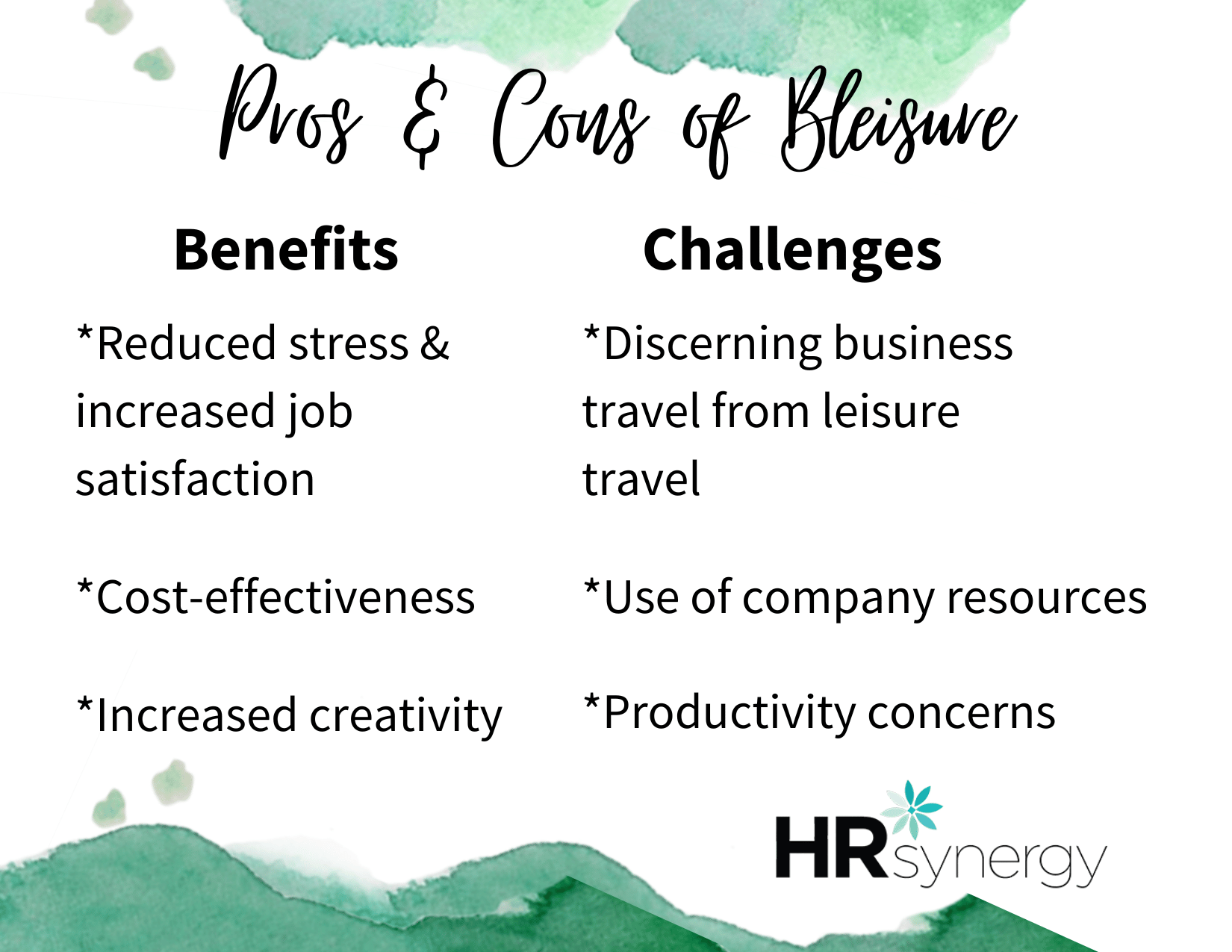
The concept of “bleisure” travel, where employees combine business and leisure on their trips, can offer numerous benefits both for employees and companies. However, there are also challenges and considerations that need to be addressed when implementing such a policy.

Creating a Bleisure Policy

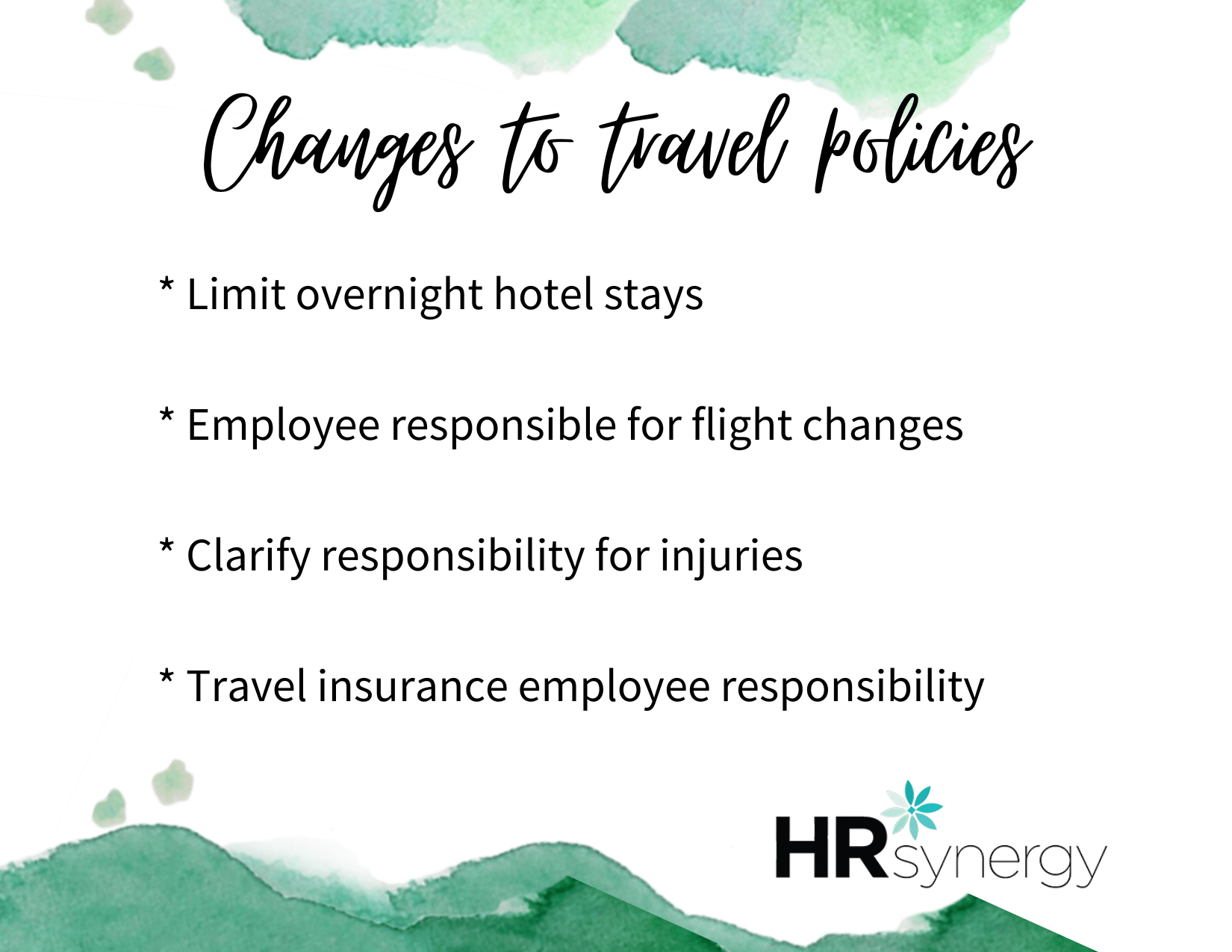
To address these challenges and enjoy the benefits of blended travel, companies should consider making changes to their travel policies. HR Synergy can help! 

Reach out to us for more information about how we can help you navigate Bleisure travel and other HR related issues/concerns.

DHS Ends Form I-9 Requirement Flexibility

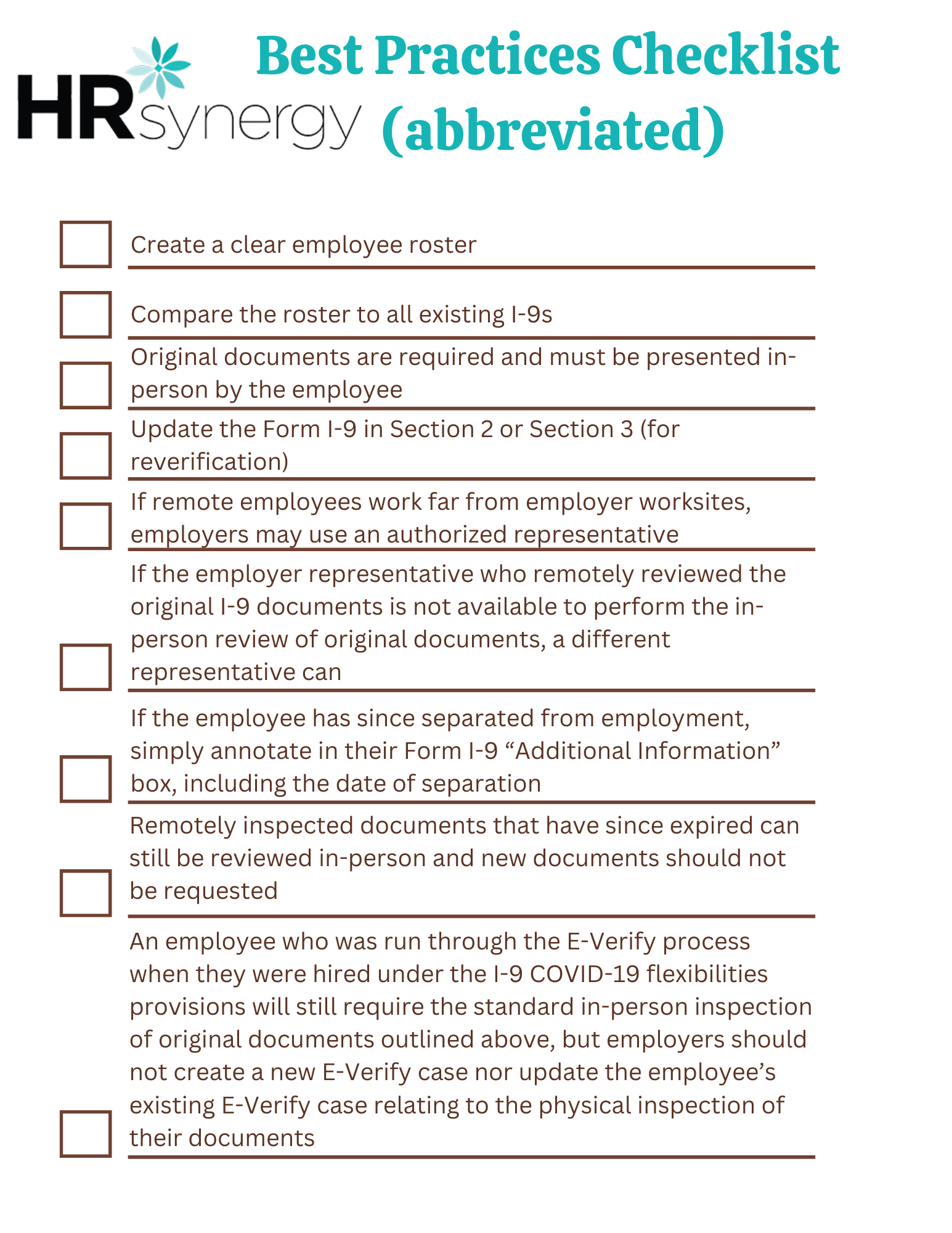
COVID-19 temporary flexibilities for Form I-9, Employment Eligibility Verification, will end on July 31, 2023. U.S. Immigration and Customs Enforcement (ICE) announced that employers must complete in-person physical inspection of identity and employment authorization documents for employees whose documents were inspected remotely (or virtually) during the temporary COVID-19 flexibilities program (from March 20, 2020-July 31, 2023)  by August 30, 2023. Also, employers need to annotate the Form I-9 for this population. Note, this will take significant action to update and/or correct your Form I-9 by the deadline. Failure to complete these actions could result in significant monetary and other penalties.

Additionally, there currently is not a “fix” for remote employees. Stay tuned for results from the DHS’s pilot program that incorporated virtual (or remote) inspection of I-9 documents.

Click here for the Expanded Best Practices Checklist.

Keep watching for the release of a new version of the Form I-9, release date currently unknown. 

See USCIS’s I-9 Central Questions and Answers for more information. However,, scores of potential questions could emerge based on your unique circumstances, feel free to reach out to us for guidance.

If you have questions about the details of this, please reach out to us here for clarification.

Keeping an Eye on AI: ChatGTP Policies?

We are all aware of the growing presence of artificial intelligence in our workplaces. Artificial intelligence consists of the computer-controlled machines and software that simulate human intelligence. AI permeates our world from talent acquisition programs to training simulations to chatbots. Ideally, AI coupled with human employees will advance jobs, not replace them.

As artificial intelligence becomes more widespread, states have begun executing new laws and regulations to control how AI tools are used. Kelly Dobbs Bunting, an attorney with Greenberg Traurig in Philadelphia, told attendees during a concurrent session at the SHRM Annual Conference & Expo 2023 in Las Vegas, “you can expect more city and state regulation of this because they’re not going to stand around and wait for the federal government to step in. The states are moving to protect their citizens…There is a tsunami coming of state regulation.”

There is real concern that AI software discriminates against Black people and people with disabilities. AI software that is used to score job candidates based on their emotional responses, eye movement, facial expressions, vocal intonation, and word choice determines if they are trustworthy. Therefore, accommodations or alternative screening methods need to be made available.

Four federal agencies, the U.S. Equal Employment Opportunity Commission, the U.S. Department of Justice, the Consumer Financial Protection Bureau and the Federal Trade Commission (FTC), plan to collaborate enforce civil and rights and consumer protection laws to prevent AI discrimination in the workplace. “Employers will be responsible for rooting out and curing any bias created by the AI software that they use in employment-related decisions,” Dobbs Bunting said. To prevent discriminatory outcomes, employers must “conduct ongoing analyses of the software, even if the vendor says, ‘Don’t worry; I got you. The software’s good.’ Do not believe that, because you will be held liable along with the vendor, if the vendor is mistaken about its impact on hiring,” Dobbs Bunting said. “You have a duty to understand the software, understand how it was tested and continue to test it.”

AI should not make employment decisions alone. There must be interaction between AI as a tool and HR professionals with the human as the final critic. It is critical that companies evolve and create policies for when ChatGPT and other AI can be used to perform their work, like generating reports.

“ChatGPT can help us, as HR practitioners, to be knowledgeable, to be nimble and to have a seat at the table,” said Carol Kiburz, vice president of HR for Halff, an engineering firm based in Dallas, during her June 13 concurrent session, “ChatGPT: Disruptor or Enabler?” at the SHRM Annual Conference & Expo 2023 in Las Vegas. “This is an opportunity, and if you can start using ChatGPT in a way you feel comfortable, you can be seen as a leader of thought.”

ChatGPT, Google’s Bard, and Microsoft’s Bing AI are generative AI chatbots and can be used to support HR professionals’ work. Be aware that these AI chatbots gather content through the internet without providing sources and can be filled with well-concealed mistakes. There are ways to utilize these technologies to increase your HR department’s efficiency like using it to create policies, design employee guides, draft emails, and write training programs.

Be wary of using ChatGPT’s responses directly. It is important to recognize its limitations and be sure to customize and proof-read for errors. Also, we need to recognize that this technology puts us at the forefront of another workforce shift.

I decided to give ChatGTP a test myself. This is what it said when I entered the article I wrote above about ChatGTP:

The passage you provided highlights the growing presence of artificial intelligence (AI) in workplaces and the need for regulations to control its use, especially to prevent discrimination. There is concern about AI software potentially discriminating against certain groups, and federal agencies are planning to collaborate to enforce civil rights and consumer protection laws to address this issue.

The article also emphasizes that AI should not be making employment decisions alone; there should be a balance between AI tools and human professionals, particularly in HR. HR practitioners can use AI chatbots like ChatGPT, Google’s Bard, and Microsoft’s Bing AI to support their work, increase efficiency, and gain knowledge. However, it’s essential to be cautious when using AI-generated content and not rely solely on it without human review and customization.

The technology is seen as an opportunity for HR professionals to become more knowledgeable and adaptable, but it also requires them to understand the limitations and potential mistakes that AI can make. By using AI responsibly and being aware of its capabilities, HR departments can stay ahead of workforce shifts and use AI as an enabler rather than a disruptor.

Overall, the passage provides valuable insights into the current state of AI in the workplace, the importance of regulations, and the potential benefits and challenges of using AI chatbots like ChatGPT in HR settings.

Curious how to implement policies regarding the use of artificial intelligence such as AI chatbots (like ChatGTP), contact us. We are here to support you in this rapidly changing technology climate.

Pace of Peak Productivity

Traditional office hours, are they out-dated?

For Gen Z employees, their peak productivity typically is later at night, not the standard 9-5 employers are accustomed to. A study from Adobe found that over a quarter (26%) of Gen Z workers reported their peak productivity time between 6:00pm-3:00am, versus 18% of millennials, 13% of Gen X, and 6% of Boomers. Peak productivity times vary between generations. Boomers reported peak productivity in the early morning (3:00am-9:00am). 76% of Gen X employees say they are most productive from 9:00am-6:00pm. Gen Z employees were the least likely to report peak productivity during the traditional 9:00am-5:00pm. Over 60% of Millennial and Gen Z employees feel pressured to work traditional hours, even if they are not as effective, versus 52% of Gen X and only 42% of Boomers feel this pressure.
70% of Gen Z employees would consider leaving their current jobs for a job with more schedule autonomy. About 75% of younger generation employees say they would switch jobs for better work-life balance and 66% would switch for remote work. Gen X and Boomer employees’ responses were lower than Gen Z (50%), assuming salary and job descriptions do not change. However, Gen Z is not alone in the desire to control their work hours; 51% of all respondents (regardless of age) prefer to work when it is most convenient for them versus 16% who want to work on a prescribed schedule. 

Today’s employees not only want flexibility; they want to work efficiently. 70% of Gen Z, 52% of Gen X, and 37% of Boomer workers would switch jobs for access to tools that improve efficiency and productivity. Businesses can implement organizational adaptations to attract and retain top workers. Otherwise, burnout for strict work requirements are likely. Over 50% of Gen Z and Millennial employees intend to change jobs this year, compared to 25% of Gen X and Boomer employees. As not to loose quality employees across generations, here is a list of business practices to follow:

  • Set guidelines and standards to minimize conflict (core work hours, work location)
  • Establish asynchronous vs. synchronous work guidelines
  • Survey employees for feedback 
  • Find flexibility alternatives if work-hours are not pliable 
  • Develop tools to reduce menial tasks that take away from high-value work time

We at HR Synergy lead trainings to understand generations in the workplace. Contact us today to schedule one!

Better to Be Safe Than Sorry


June is National Safety Month. Did you know that over 4,100 workplace deaths and 4 million injuries were preventable in 2020?

Now is the time to refer to your OSHA logs and review the incidents that you can prevent. Look for the safety incident patterns in your workplace.


Many safety challenges have been the same for decades and we have evolving risks to consider too this month and year-round. Read our blog about being smart and keeping your workplace safe and fun this summer in regards to weather-related and heat-related issues.

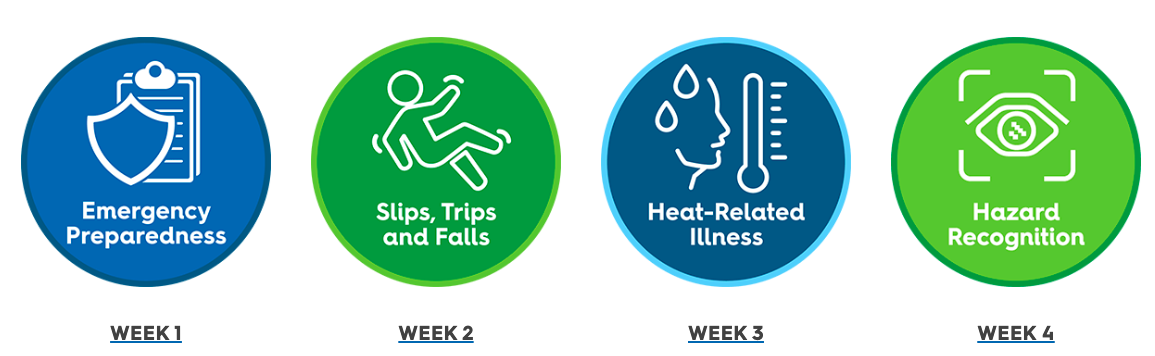
The National Safety Council (NSC) is also presenting their weekly promotions to heighten awareness on safety in the workplace:
-Emergency Preparedness
-Slips, trips, and falls
-Heat-related illness
-Hazard recognition

Want to share your safety pride? Consider Downloading the #gogreenforsafety sign to post on social media and around the office.

You can also encourage your employees to the their commitment to safety seriously by taking the SafeAtWork Pledge.
For HR support in keeping your office safe, Click here to contact us.

Oh the Places We’ll Go

June is National Great Outdoors Month -it is time to get outside! We seem to spend more time indoors than ever, contributing to stress and disconnectedness. How are you encouraging your office to step outside the office this month and leave technology behind? We all need to take a break from our work and the tiresome day-to-day regimen. Consider encouraging Great Outdoors Month as a company wellness initiative fitness challenge to build a healthier work environment. If you need ideas how to incorporate summer outings into your company culture, check out our blog. Exploring the outdoors is important for our social, mental, physical, and economic well-being, according to over 100 studies.
Experiencing the outdoors aids us in 9 areas:
  1. Intellectual wellness
  2. Relieves sleep problems
  3. Inspires
  4. Exhilarates
  5. Improves physical health
  6. Sounder affinity
  7. Boosts spiritual well-being
  8. Increases volunteering
  9. Creates connectedness
Hear what HR Synergy team member Peter is doing this month to celebrate:
“I will be helping my in-laws prepare for an outdoor wedding in Vermont.
My brother-in-law and his future wife met in translator school in the USAF;
they both are active duty.”
In addition to these activities, you could also hike, bike, picnic, fish, kayak, zip-line, meditate, or swim in a lake. You could also consider participating in these events from the official Great Outdoors Month guide:
Bike travel event- 3-5 June
National Trails Day- 4 June
Free fishing day- 1-9 June
National Get Outdoors Day- 11 June
Outdoor Stewardship Week- 13-17 June
Do you need assistance planning safe outdoor activities for your employees? Click here to contact us.

How to Retain Your Quality Employees

Now that you have your stellar employees, do you need help retaining them? Consider conducting regular employee pulse surveys of those involved in the day-to-day operations in order to gain insight into your personnel’s morale. You can use this feedback to obtain a valuable perspective and directly tackle issues. There is a direct correlation between higher satisfaction scores and higher levels of profit and productivity. In a SHRM survey, 90% of HR executives concur that consistent employee surveys positively affect the business.

SHRM identifies 4 questions to include in your engagement surveys to enhance retention and productivity.

If you want help formulating your employee pulse survey, contact us today!